Global state of the art. Against every incumbent.
Aggregate skill across RMSE, ACC, and CRPS. Normalized to EPT-2 = 100.
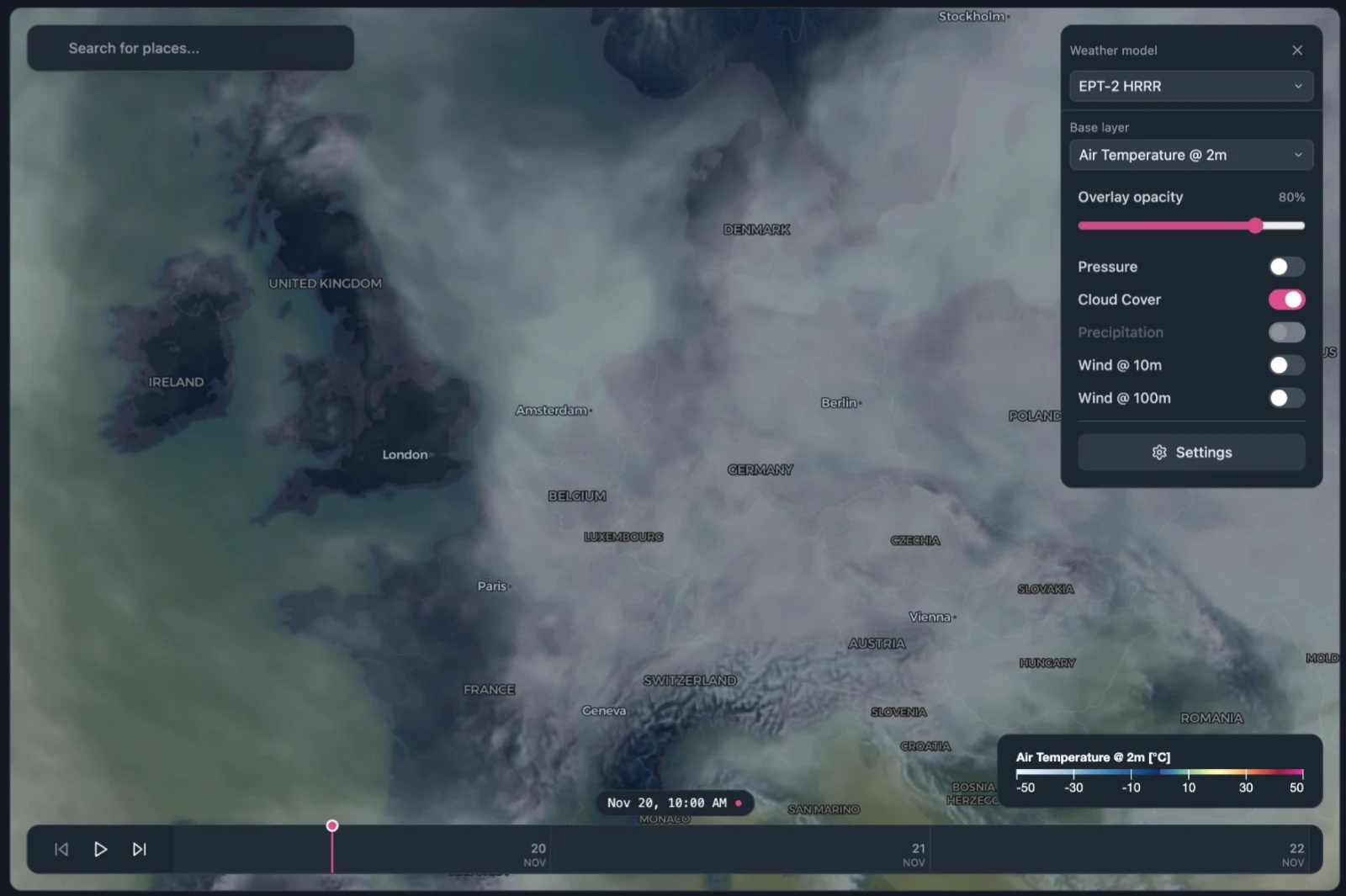
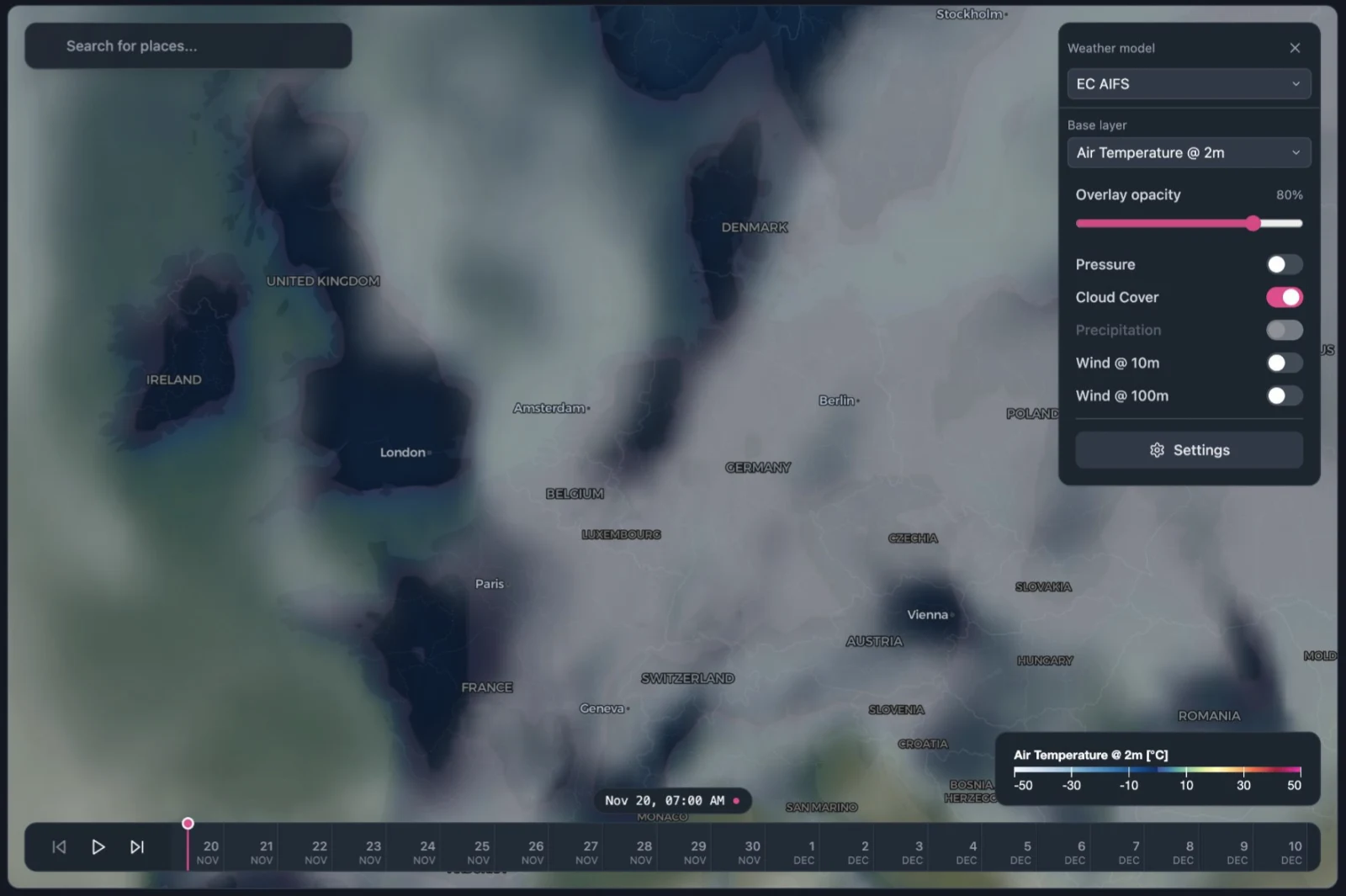
The companies that price power for five continents already run on Jua.
One agent. Three pieces of reality. Same architecture. Same weights.
The agent runs energy markets.
Across five continents, every hour. It queries the world model, prices moves, and surfaces what matters. Energy is the first physical market the agent touches at scale.
The agent wagers on reality.
Same agent, new objective, no rewriting. We pointed it at weather contracts on Polymarket. It made money from day one. The objective function is a parameter; the agent is universal.
The agent improves itself.
Pointed at our cluster, the agent designs experiments, dispatches them, evaluates them, and trains the next world model. The recursion is closed.
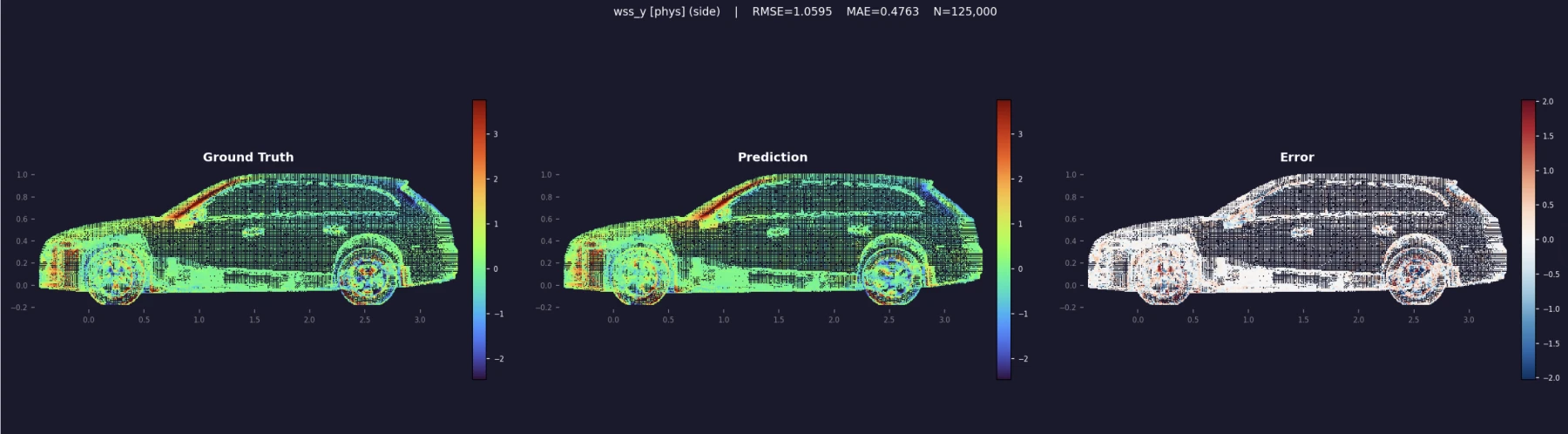
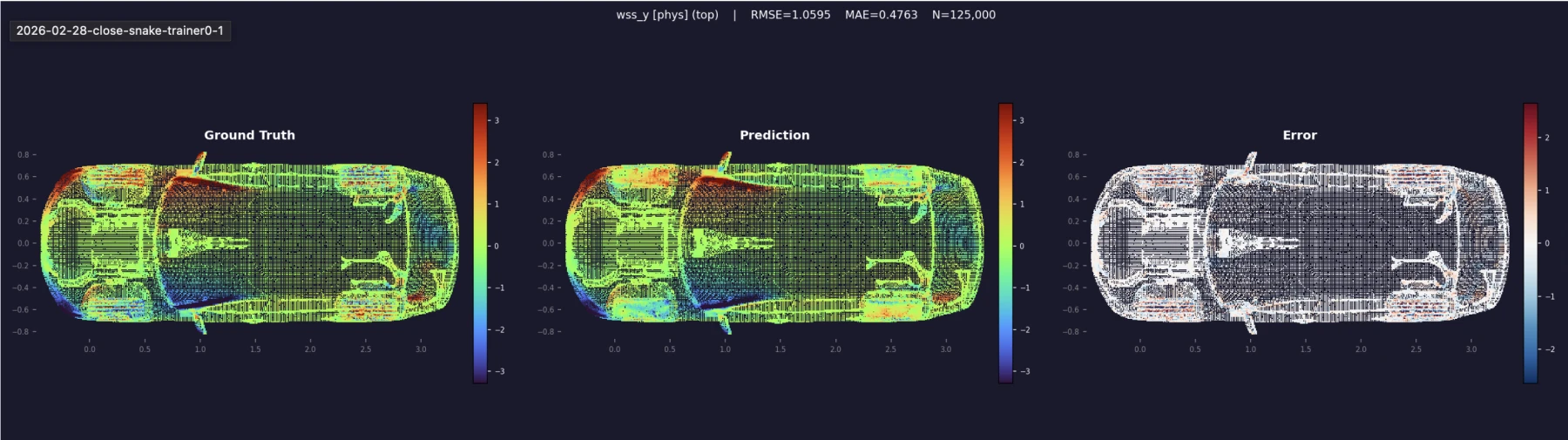
We are going to design every physical thing.
A jet engine designed in a week.
A fusion reactor iterated in days, not decades.
New alloys discovered without a single experiment.
A power grid that never fails.
Aircraft with half the fuel burn.
A drug designed in months, not decades.
Built with ETH Zurich, Google Research, and the ETH AI Center. Backed by the founder of The Climate Corporation and executives from DeepMind and Meta.
Research from Jua and our team. Peer-reviewed at NeurIPS and ICLR.

It started with a kid who could not stop simulating worlds.
Marvin grew up in Germany modding games and building models of his home city. He studied biotech and computer science, dropped out of RWTH Aachen, and at 22 founded and sold his first company.
While later building simulations on classic supercomputers in his family business, one thing became obvious: if forward physics ever becomes cheap, everything physical gets redesigned. Every blade, every molecule, every material. Deeply inspired by Schmidhuber's Learning to Think, he waited for the hardware to catch up. When GPT-3 came out and chips were finally fast enough, he started Jua.